Showing posts with label 12th century. Show all posts

Tuesday, March 24, 2015

DALLYING WITH DICE

It's come round to my turn on THE HISTORY GIRLS blog and this month I've blogged about the vice of dice in the 12th and 13th centuries.   The more things change, the more they remain the same!  You can read the piece by clicking on the link below.
DALLYING WITH DICE


Sunday, June 16, 2013

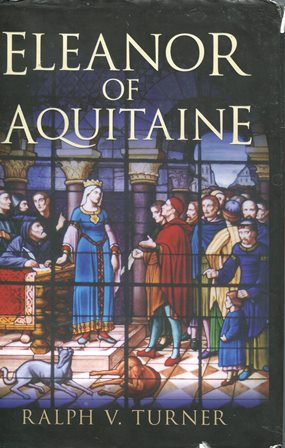
THE SUMMER QUEEN: Behind the scenes 9: The Research Books.


I have a huge library of research books. You can see some of them here - it needs updating with more when I have an hour to spare! My Reference Books

On my Behind the Scenes post today though,  I want to post just a few of the research books I used in writing THE SUMMER QUEEN.  I hope you'll enjoy them!


REFERENCE BOOKS USED IN THE RESEARCHING THE SUMMER QUEEN - Not in any order of preference.  Marked with 3 stars are the most interesting and/or useful, then 2, then 1. Bools marked with a question mark are ones I would advise the reader to use with caution and check up on the facts via more reliable sources. The more question marks, the more caution required!

***  'Travel Diary of the 2nd Crusade as
far as Antioch.  Primary source

**

***


***

??

***

????

** *


**

**


***


*

?

*

**


***

***

**

**

***

*

??

*

????????
***

***


Monday, June 10, 2013

THE SUMMER QUEEN: Behind the Scenes part 5: Scandalous Ancestors


SCANDALOUS ANCESTORS

                Alienor has a reputation dwelt on by her biographers for coming from a family laden with dysfunctional characters whose lives were rife with shocking scandals. People will sometimes say ‘It’s no wonder she turned out as she did with ancestors like that.’  Actually I think she turned out rather well against the odds, and while everyone looks to her ‘interesting’ family relationships, no-one ever pauses to examine Louis’ ancestors in the same way.  I also wonder how out of the ordinary her family experiences were for everyday aristocratic experience in the 12th century.  When you begin looking, everyone has entire racks of skeletons rattling in their cupboards!

Alienor’s paternal grandfather had a lively past.  William IX Duke of Aquitaine, was a man with an aptitude for poetry, some of it crude and bawdy, (however, one has to remember that crude and bawdy poetry was a cultural norm of the time and would have been less shocking then, than it is now) and a huge  appetite for life in all its guises.  

His first wife was Ermengarde, daughter of Count Fulke IV of  Anjou, but that marriage was dissolved after four years and was without children.  William moved on to pastures new and in 1094  married Philippa, daughter and heir of count William IV of Toulouse by whom he had several children, including two boys – William and Raymond, and five daughters.   Four years into his marriage with Philippa, the couple seized Toulouse, which Philippa regarded as her birthright, and to which her grand daughter Alienor would continue to press a claim in her turn.   Threatened with excommunication for such an act, William went on crusade in expiation.  To do so, he had to mortgage Toulouse back to the son of the man he had taken it from – which proved an unwise move and led to him and Philippa once more losing Toulouse.
Duchess Philippa persuaded her husband to give some land in northern Poitou on which to found a religious community dedicated to the Virgin Mary.  This was to become the famous Fontevraud Abbey which would later be the resting place of Alienor of Aquitaine, her second husband Henry II and their son Richard I.

William managed to fall foul of the church on a couple of occasions, the first time for tax evasion, the second time for abducting the wife of his vassal the count of Chatelleraut. The lady  went by the name of Amaberge or something similar, but came to be known as Dangereuse – for reasons that history does not disclose.   William brought her to Poitiers and installed her in an apartment built for her that came to be known as the Maubergeonne Tower.   Philippa  protested at his behaviour and complained to the church. When a bishop demanded that William give up his mistress, William replied that hair would grow on the priest’s bald pate before he gave up Dangereuse.

Philippa retired to Fontevraud, there to fulminate with Ermengarde, William’s first wife, about William’s scurrilous behaviour. (Ermengarde was then lodging at Fontevraud).
  Dangereuse had a daughter, Aenor, from her union with her cuckolded husband, Aimery of Rochefoucaud.   A marriage was arranged between Aenor and Duke William’s heir and namesake, William.  What the children thought of their parents’ liaison isn’t known.  Did William side with his mother?  Did Aenor feel for her father?  We’ll never know how this dynamic worked out, or how William X and Aenor felt about each other, although they did their duty and produced three children,  Alienor, Petronella, and William Aigret,  
Alienor, born in 1124, was only about two years old when her notorious, poetry-writing  grandfather died.  How much influence he had on his little granddaughter we don’t know. Also there is no indication as to when Dangereuse died and we don’t know how much contact she had with her.

Whatever the unknown details, the ones we do know – adulterous grandparents, one of whom was excommunicated twice and was in the habit of writing sexually and scatalogically explicit verse – have served to colour Alienor’s own reputation down the years.  She must have had the potential for being flighty and up to no good with grandparents like that, some would say.

But wait a minute.  What of her first husband’s background?  What of the relatives of Louis VII, nick-named in later years Louis the Pious.  Let’s have a look:

It all starts out well with his grandfather Philip, who married one Bertha, daughter of the count of Holland.  With Bertha he had 5 children, including Louis’ father, the future Louis VI.  However, then the cracks begin to open up.  Philip cast his eye upon a lady called Bertrade de Montfort, who unfortunately happened at the time  to be married Count Fulk IV of Anjou (who had already been married several times himself, and was working his way through  an assortment of wives).  The chronicler John of Marmoutier said of the match and Bertrade  The lecherous Fulk then fell passionately in love with the sister of Amaury de Montfort, whom no good man ever praised save for her beauty.”  Right.

Claiming that Bertha his first wife was too fat, Philip dumped her and abducted and bigamously married Bertrade instead, for which he was excommunicated, first by the Archbishop of Lyon, and then by Pope Urban.  The ban was lifted on several occasions when Philip promised that he would put Bertrade aside, but it was all empty sincerity.  Rather like William IX’s comment that hair would grow on a bald prelate’s head before he gave up Dangereuse de Chatelleraut,  so Philip was too attached to the woman he had snatched from the Count of Anjou, to let excommunication get in the way of the relationship. Eventually the church gave up.

Orderic Vitalis says of Bertrade that she was keen for one of the two sons she had born Philip to succeed him and sent a letter to Henry I asking him to arrest her stepson Louis.  Why Henry I should be involved in this isn’t explained.  Orderic claimed too that Bertrade tried to kill her stepson Louis first through the arts of sorcery, and then through poison.  Her attempts, if there is any truth in them, didn’t work because Louis succeeded his father in 1108 and Bertrade did not die until 1117. William of Malmsbury tells us that  "Bertrade, still young and beautiful, took the veil at Fontevraud Abbey, always charming to men, pleasing to God, and like an angel."   If she did go to Fontevraud, then she must have known the self-exiled wives of William IX of Aquitaine too – what an enclave that must have been!   Bertrade’s son from her first marriage was Fulke V, father of Geoffrey le Bel, and grandfather of Henry II.  

Meanwhile, another scandal bubbling under in French royal and allied circles, involved the sister of Louis VI, Constance, who was Louis VII’s aunt.   She was married to Hugh, Count of Troyes, and bore him a son baptised Eudes.  However, Hugh believed himself impotent and contested the paternity of the child, declared him illegitmate, and instead made his nephew Theobald of Blois his heir.  Hugh and Constance’s marriage was dissolved and she went on to marry Bohemond of Antioch and departed for a life in the Middle East.  Deluded husband?  Unfaithful wife?  Who knows?


Which all goes to show that Alienor was not the only one with skeletons in her family cupboard and her husband Louis’ background was every bit as colourful as her own.  Not that you find biographers making much mention or calling Louis out on his ancestors!

Sunday, June 09, 2013

THE SUMMER QUEEN Behind The Scenes 4. Alienor's age:


In THE SUMMER QUEEN, Alienor of Aquitaine begins the novel as a bride of 13 years old to the future Louis VII who is 17. 


Alienor’s birth date had long been thought to be 1122, making her 15 at her marriage, but research - now more than ten years old suggests that she was actually born in 1124 and thus only 13.  The 1124 date is the one that historians now prefer.  It's used on the Palais de Justice in Poitiers, which incorporates Alienor's great hall, built after circa 1168. 


An early 14th century manuscript, copied from earlier sources says: “In 1136 on the fifth ides of April, which in that year was Good Friday, William count palatine of Poitou and the last duke of Aquitaine, died at Saint James in Galicia, leaving his only daughter named Alienor, aged thirteen years.’

In terms of earlier sources, the text is a pastiche of excerpts from the chronicles of Geoffrey de Vigeois which were composed in Alienor’s own lifetime. Some of the information is accurate, some is not, but Alienor’s birth date is reckoned correct. The errors come when the information stated has been acquired from further afield than Aquitaine. 


The scholar who has unravelled the tangle of Eleanor's birth year is Andrew W. Lewis, Prof of history at Southwest Missouri State University. He says:


"For Eleanor of Aquitaine's age, most recent scholars have relied on Alfred Richard, the great modern specialist on the counts of Poitou. But details of this sort were not among Richard's strengths as a scholar. Moreover, he vacillated in his statements on the subject, and his argument is circular. Thus, when speaking of Eleanor's birth, he wrote that it was only from knowing that she was 82 years old when she died, in 1204, that one could place her birthday 1122. Yet when speaking of the death he gave her age as 'about 82 years', while citing no source to that effect." 


How did Richards know she was 82 when she died in 1204? There is a primary resource that speaks of her death and which is cited on other occasions - the Chronicae Sancti Albini Andegavensis. When examined by professor Lewis, however, he found that the manuscript did not give any date for her death at all and stated that she died in Poitiers, not at Fontevraud.


Professor Lewis goes on to say that greater confidence can be placed in the genealogical text composed at Limoges because the record contains an early tradition that she was thirteen at the time of her father’s death in April 1137. Lewis is of the opinion that not only would more people at that time, before the passing of generations, have known the facts, but that by canon law women had to be at least 12 years old in order to marry, and the information would have been of practical relevance. It was a deliberate statement that she had attained her majority and important. Most biographers have accepted the Richards’ statement without checking the Chronicae Sancti Albini Andegavensis. chronicle, and therefore calculate the birth date as 1122, based on false secondary sources and that non-existent ‘she died age 82 in 1204' statement.


At the outset of her marriage, then, Alienor was a thirteen year old girl, cast adrift on a sea of uncertainty and facing a future very different to the life she had led thus far. It makes for a fascinating premise to explore in a novel, and one, that as far as I know, has not been used before, other fictions having taken her age at marriage as fifteen.

Wednesday, June 05, 2013

THE SUMMER QUEEN Behind the scenes 3. ON ELEANOR OF AQUITAINE'S APPEARANCE


THE SUMMER QUEEN research snippets.
Behind The Scenes part 3.


 So what did Alienor look like?

Let’s see what those historians and biographers have to say on that score: 

W.L. Warren in his biography of Henry II calls Eleanor a ‘black-eyed beauty.’

Frank McLynn in Lionheart and Lackland: ‘Eleanor of Aquitaine had a dark complexion, black eyes, black hair, and a curvaceous figure that never ran to fat even in old age.’

Desmond Seward in Eleanor of Aquitaine the Mother Queen: ‘She was a beauty – tall, with a superb figure that she kept into old age, lustrous eyes and fine features. (it is likely that her hair was yellow and her eyes blue).’

Douglas Boyd in Eleanor April Queen of Aquitaine. ‘Her face was humorous and alert, framed by long auburn hair flowing freely from beneath the coronet. Her eyes according to legend were green and fearless.’

Alison Weir in Eleanor of Aquitaine, By the wrath of God Queen of England: ‘It is more likely that she had red or auburn hair since a mural in the church of Sainte Radegonde in Chinon which almost certainly depicts Eleanor and was painted during her lifetime in a region in which she was well known, shows a woman with reddish-brown hair.’ 


Marion Meade in Eleanor of Aquitaine: A biography: ‘Eleanor, exceptionally beautiful at fifteen, had matured into a saucy, hot-blooded damsel, and perhaps he (her father) feared that, unproperly chaperoned, she might grant excessive courtesies to some ardent knight.’…’If she conformed to 12th century Europe’s ideal standards of feminine beauty…she must have been blond with grey or blue eyes set wide apart. Her nose would have been straight, her skin white, and she would certainly have had a long, slender neck, firm breasts, and perfect teeth…’

The above are all interesting and show what a variation in opinion there is, most of it based either on fantasy or wrong information it has to be said, even though the authors are writing ‘factual’ works. Meade’s comment about a ‘saucy, hot-blooded damsel’ is astonishing. It’s a defamatory statement without any kind of proof, but par for the course throughout the various biographies of Alienor through which I’ve ploughed over the last 18 months.


There is not one single physical description of Eleanor out there as to her hair and eye colour.  Not one single. The chapel mural at St. Radegone is more likely NOT to be Alienor rather than Weir’s ‘almost certainly.’ Far more probable, given the dateline of the mural and the composition, is that Henry is leading out his four sons on a hunting expedition with his eldest son the Young King, the crowned figure. The dark one riding at his side, will be John, whom Henry requested to be cared for by the Young King, should Henry himself die untimely. The John figure also, along with the Young King, is nearest to his father, and John was known to be Henry's favourite son.  It’s pretty obvious that the crowned figure isn’t Alienor. The figures of the other riders are of an age to suggest that when this was painted, she was in prison and out of the picture – literally. However, that particular detail seems to have passed certain biographers by!


The black hair, black eyes, and the various droolings over the curvaceous figure would appear to be some sort of modern male wish fulfilment. I haven’t noticed her being particularly buxom on her tomb effigy! 


I have portrayed her with deep blond hair and blue eyes in THE SUMMER QUEEN. My own reasons?
1. My alternative psychic research showed her like this. However, if your opinions don’t encompass such things, then let the matter rest in the same realm of the imagination as the above descriptions by the historians.
2. There is circumstantial evidence in the historical record. If you look back through the Dukes of Aquitaine, you find an ancestor in the 10th century called William the Towhead – i.e. hair the colour of straw. So the blond gene ran in the family – which is more than we actually know about the other colours at this stage!

photo of the Radegonde mural courtesy of John Phillips

Monday, June 03, 2013

THE SUMMER QUEEN BEHIND THE SCENES Part 1

Tomorrow I'll be starting a series of short blog posts themed around the background research to The Summer Queen.  Look out nearer the 20th June for news of a giveaway.

Today here's an introduction:

THE SUMMER QUEEN:
Behind the scenes Day 1.

It was that time again when contracts come round for renewal and myself, agent and editor went to lunch to discuss what might be in the offing following Lady of the English. 

I had one or two ideas, which readers may well see coming to fruition further along the line, but what stood out for me was that I had been wanting to write about Eleanor of Aquitaine for a while. It wasn’t something that burst over me like a firework. It was born more from an enduring curiosity in her, fed by the fact that she kept cropping up as a peripheral character in my novels. I had read information about her in the standard biographies, although the detail I required didn’t go deep at that stage. I had heard all about The Lion In Winter from the various groups to which I belong online, but I had never seen it – thankfully I think because it has not coloured my view of Eleanor. I HAD watched the BBC’s The Devil’s Crown as a teenager and been blown away by the performance of Jane Lapotaire as Eleanor. If anything, it was Lapotaire’s image I carried at the back of my mind.

I was aware when I sat down with my editor that there were several novels already out there about Eleanor, but the concern proved not to be an issue. After all, everyone’s take is different, and we both felt there were many facets of her story that hadn’t been explored, or that bore looking at with a fresh eye. For example, the current opinion by historians that she was only thirteen when she married. Or the matter of the incident at Antioch where the tabloid press of her day intimated that she committed adultery with her uncle. What really happened there? And what happened in Paris when the young future Henry II and his father came calling? Who brokered that match? How much was passion and how much cold political necessity? And that was only the first novel. Eleanor of Aquitaine crammed so much into her long life that it was going to take a trilogy to work through the various dramas and scandals.

My editor was confident enough to offer me a three book contract to write Eleanor’s story and I returned form London with a brief to get to work. It seems to have been a long time coming, and paradoxically no time at all since that moment. My version of Eleanor has become Alienor, which was the name by which she was known in her own time, and already what a journey it has been.
You can read the first chapter here: http://www.littlebrown.co.uk/Articles/the-summer-queen-extract.page
And listen to the soundtrack here and the modern music that inspired my writing.http://elizabethchadwicksoundtracks.blogspot.co.uk/2013/06/the-summer-queen.html

Wednesday, April 24, 2013

Check Mate!

Today's research snippet.
A few facts about Medieval chess:
Documentary evidence for the game of chess first appears in Latin Christendom in the early 11th century. The chess pieces attributed to the court of Charlemagne have now been dated to 11thC Italy. At the moment no chess piece of European provenance can be dated any earlier than the early 11thC. 

By the first quarter of the 12thC, chess was listed among the skills that a good knight ought to possess. Chess came to Europe from the Arabic lands, but its origins like further back in Northern India, where it was thought to have been invented some time before 600AD. The Sanskrit word for the game is Chaturanga, and the Arabic Shatranj. The Abbasid caliphs of the 9th and 10th centuries were keen patrons of the game at their courts.


The chess pieces themselves would have appeared rather alien to Western European society. Heavily imbued with Muslim terminology, the pieces themselves had been modelled to fit in with the Koranic ban on representational images. However, the actual rules and strategy of the game were universal, and the pieces would gradually adapt to the culture of the land in which the game was played. In modern England we have the king, queen, bishop, knight, rook, and pawn. In the game of shatranj, these were called the shah,(king) firz, (vizir) al-fil (elephant), faras (horse) , rukh (chariot) and baidaq (footman). These latter titled go back to the traditional elements of the Indian army. – infantry, cavalry, elephants and chariots. The latter two weren’t familiar to medieval westerners. As the game progressed the names changed. Shah, faras and baidaq became king, knight and footman. (rex, miles, caballarius pedes). Firz and al-fil became queen and count (regina, comes). Rukh more or less remained as Rukh. The actual name ‘chess’ that we use today has come down to us from ‘Shah.’
Gradually the west developed their chess pieces into feudal representations. The Lewis Chess pieces found on the Isle of Lews in 1831, date to circa 1150 and depict a king, queen, bishop, knight and armed man with only the pawns carved as simple forms.


Although an intellectual game, wagers were frequently made on the outcome, and there was also a form of chess that was played with dice. Bernard of Clairveaux (typical to his nature) forbade the game of chess to the Knights Templar. Alexander Nequam, King Richard I’s milk brother, condemned chess because of its violent and quarrelsome nature. Someone else thought that it was all right for laymen to play the game providing they did not use dice, but that in a priest it was shameful, senseless and disgusting. Louis IX of France issued a complete ban on chess as well as other board games in 1254. That chess led to violence is often portrayed in literature. The Romance of Fouke FitzWaryn, written in the 13th century and the basis for my novels SHADOWS AND STRONGHOLDS and LORDS OF THE WHITE CASTLE/THE OUTLAW KNIGHT tells us that King John (well Prince John Count of Mortain at that time) and Fulke FitzWarin, clashed as teenagers over a game a of chess. ‘John took the chessboard and struck Fulke a great blow. Fulke felt himself hurt and raised his foot and struck John in the middle of the stomach, so that his head flew against the wall, and he became all weak and fainted.’ Whether this is true, or a literary conceit is open to conjecture, but there are a couple of reports in the middle ages of chess boards being used as murder weapons in homicide cases!


At the opposite end of the spectrum, many a flirtatious moment might be conducted across a chess board and learning to play the game was one of the accomplishments a young noblewoman was expected to learn. 


So it wasn’t just a case of black and white. The medieval game of chess was one of many nuances and subtleties!

Lewis chessman - British Museum
Photo courtesy of Rosemary Watson

Tuesday, April 16, 2013

Hamelin de Warenne : "Par lege Per Lege"


Hamelin FitzCount, Earl of Surrey and Warenne
Circa 1130 - 1202
"Par Lege Per Lege"

Geoffrey le Bel, Hamelin's father
Plaque on his tomb effigy 1
Hamelin FitzCount is one of those supporting role players in English history who is vaguely known to people well versed in the life of the Angevin kings, but otherwise off most people’s radar. However, he has a big part to play in my Eleanor of Aquitaine trilogy, especially in books 2 and 3, and so does his wife Isabel, Countess of Surrey and Warenne, from whom he took his title.   So who was he?  Let’s take a look at what we do and don’t know about him.

The first is a don’t know – his birth date isn’t recorded.  His father was Geoffrey, Count of Anjou, husband of the Empress Matilda who was heiress to the Duchy of Normandy and the English crown. (although that right was stolen from her by her cousin Stephen). The marriage took place when Geoffrey was not quite 15 and his bride 26.  The union produced 3 sons in the fullness of time but from circumstantial evidence including a separation, does not appear to have been one made in heaven.  Geoffrey was known as ‘le Bel’ in his lifetime, meaning ‘The beautiful’ and descriptions say that he was tall, graceful, and long-limbed with red hair and piercing crystal-grey eyes.  As well as his legitimate heirs, Geoffrey had an illegitimate son and two daughters by a mistress or possibly mistresses unknown. Some genealogies list the lady as one Adelaide of Angers.  There is the very, very scant possibility that she may have been called Matilda the same as her husband’s wife.
2
   Whatever the circumstances, Geoffrey provided for Hamelin, Emma and Mary and took them under his ducal wing.  Emma was later to become one of the ladies of Alienor of Aquitaine’s chamber and to marry Welsh prince Dafydd ab Owain Gwynedd in the summer of 1174.  Mary, became Abbess of Shaftesbury. 

Not a great deal is heard about Hamelin before his marriage in 1164.  That he was a longterm part of his half-brother Henry II’s general entourage seems likely.  We know he supported Henry at the gathering at Northampton when Archbishop Thomas Becket was summoned to account for his behaviour concerning the matter of land disputes between church and crown (among numerous other things). The proceedings of that council escalated into a slanging match between the Archbishop and the barons. Hamelin got involved, defending Henry’s dignity by shouting at Becket that he was a traitor. Becket’s response to Hamelin was ‘Were I knight instead of a priest, my fist would prove you a liar!’  Later in life, however, after Becket’s death, Hamelin embraced the cult of the murdered Archbishop and claimed to have been cured of blindness in one eye by the cloth covering Becket’s tomb.
Younger sons, minor branches on the family tree and bastards are always dependent on their greater kin for handouts.  There is evidence that Henry gave Hamelin lands in Touraine before his marriage, and that he was styled the ‘Vicomte de Touraine’.  He later gave his lands at Ballan, Colombiers and Chambray-les-Tours to his nephew King Richard in 1190/91 in exchange for Thetford.  The 3 estates were situated on the Southern fringe of Tours and were in strategic positions on the road to Chinon.  This suggests that they were hereditory possessions of the counts of Anjou.  The lands were given to Hamelin either by Henry II, or by their father to provide for his bastard son.
Hamelin’s greater days, however, came partly as a result of the Becket dispute.  Henry’s youngest brother William had been in line to wed the widowed heiress Isabel de Warenne.  She had been married to King Stephen’s son William of Boulogne who died in 1159 in Poitou while on battle campaign with Henry II. They had no issue.   Becket, being awkward, declared the proposed match between Isabel and Henry II’s brother consanguineous and refused to permit a dispensation for the couple. William FitzEmpress is supposed to have pined to death on receiving this news. I doubt that very much, but for whatever reason, he died in Rouen a few months after the refusal.  Henry was not about to let the rich de Warenne lands escape the family clutches, and promptly arranged for Hamelin to marry the widow instead.  There was no consanguinity here, and Hamelin was Henry’s sole remaining brother, the other one Geoffrey having shuffled off the mortal coil a few years earlier.
3
Isabel de Warenne was an heiress worth having.  She owned substantial lands in Norfolk, Yorkshire, the south of England and Normandy. At Domesday book, her family’s lands had been valued at £1,140, which put them among the five wealthiest secular holdings in the country after the King. By the second half of the 12th century, the honour of Warenne held over 140 knights fees in England. Isabel’s ancestral holdings included castles at Lewes, Reigate, Sandal and Castle Acre, and would later include the magnificent keep at Conisbrough, inspiration for Walter Scott’s Ivanhoe.  Norman prestige lay in the castles of Mortemer and Bellencombre, which were strategic fortresses in upper Normandy and were held in the family by her uncle Reginald de Warenne.   

The family were also patrons of Lewes Priory, a Cluniac foundation dedicated to St. Pancras, and Castle Acre Priory in Norfolk.  Isabel’s family connections spread far and wide among the Anglo Norman aristocracy.  As a note for my personal interest, Isabel’s mother became William Marshal’s aunt by marriage when she wed Patrick Earl of Salisbury as her second husband. Isabel’s great uncle Raoul de Vermandois had been married to Alienor of Aquitaine’s sister. Isabel’s father had died on the 2nd crusade, one of the victims of the massacre while crossing Mount Cadmos.  Several birth dates are given for Isabel, but circa 1130 onwards seems the most likely; thus she and Hamelin were of a similar age.
Hamelin and Isabel married in April 1164.  In March of that year, a record appears on the Pipe Roll for money for clothes for Isabel – amounting to £4 10s 8d - presumably for her trousseau.
Hamelin took the de Warenne name for his own, adopting his wife’s patrimony and the distinctive chequered de Warenne blazon.  Two years after their marriage, he reported to the enquiry of 1166 that he held sixty knight’s fees in Sussex. This was by no means all and it seems that Hamelin was one of an elite handful of Anglo Norman courtiers who were not obliged to report fully on how many knights they could field in battle and to serve the Crown. The de Warenne contribution is missing from the knight’s fee survey documents of Henry II’s time, the Cartae baronum and the Infeudationes militum. However, other sources suggest that the de Warenne estates were in the top 10 of England’s wealthiest and most important honours.   
4 The motte of Sandal Castle
Isabel and Hamelin had four children – a boy and three girls. The boy, William, would go on late in life to marry Mahelt Marshal, eldest daughter of William Marshal as her second husband. The girls all made marriages among the run of the mill aristocracy, but one of their daughters (some sources say Isabel, some Adela) became pregnant by her cousin John Count of Mortain, later King John.  They had a son, Richard, who went on to have an effective military career, playing an important role in the Battle of Sandwich in 1217.  How much of a scandal this cousinly pregnancy caused at the time, is open to conjecture.  It does, however, show a continuing close social link between the families for the opportunity to have presented itself!
5
The centres of power in England for Hamelin and Isabel were in Norfolk at Castle Rising, in Lewes at Lewes Castle, and in Yorkshire, at Sandal, and Conisbrough where Hamelin built the magnificent hexagonal keep.  It’s thought to be an improved version of the castle built on the de Warenne Norman lands at Mortemer.  Perhaps he began building at Conisbrough in earnest following the rebellion of King Henry’s sons and the civil war of 1173.  Hamelin sided with his half brother Henry in this dispute, rather than with his impetuous nephews. His loyalty to the crown was always staunch. While his neighbour in Norfolk, Hugh Bigod, took the path to perdition by supporting Henry’s eldest son, Hamelin held firm at Castle Acre - and in all his other territories and ultimately triumphed.
Hamelin doesn’t appear as a signatory to that many charters involved with Henry II, but he was there when it mattered and always quietly efficient in service to his brother.  He was present at Fontevraud in 1173 when Henry met with Raymond de St Gilles, count of Toulouse to settle their differences – and thus was also a witness to the start of the Young King’s rebellion against his father.  Hamelin attested these charters as ‘Vicomte of the Touraine.’   The Touraine was a politically sensitive area and demonstrates Henry’s trust in Hamelin’s abilities.
Part of the Young King’s rebellion was caused by the fact that his father was negotiating a marriage for John to the daughter of the count of Maurienne.  This would have involved John being given the castles of Chinon and Loudon in the Touraine as a marriage portion, castles which the Young king saw firmly as his own.   Had the deal gone through, Hamelin would have had custody of those castles until the marriage took place.  As it was, it all fell through and turned to rebellion.  Hamelin firmly backed his brother Henry II during this time at a point when Henry’s supporters were in short supply.
6

Hamelin’s next moment in the limelight comes in 1176 when he is found escorting Henry and Eleanor’s youngest daughter to her marriage to King William of Sicily – so a task of status and diplomacy.
During the 1180’s Hamelin retired to his own business, much of it concerned with his Yorkshire estates, and he seems to have put his energies into building his wonderful keep at Conisbrough. Historian Thomas.K. Keefe says of him that he  “undoubtedly spent more time in Yorkshire than any of the other Warenne earls…” and that  “Years of experience at the Angevin court, coupled with private success in the management of the diverse Warenne properties, earned Hamelin a respect that would serve him well in the troubled years following Henry II’s death in 1189.”
7 The great keep at Conisborough Castle

In the period leading up to Henry's death at Chinon, Henry is found at Hamelin's home manors in Touraine, suggesting that he could rely on Hamelin's support and loyalty.
Following Henry's death, Hamelin was present at the coronation of his nephew Richard the Lionheart on the the 3rd of September 1189 and was certainly very busy about the business of the court before Richard departed on crusade. There are  13 charters attested by him  before July 1190.
As aforementioned, Hamelin exchanged his lands in Touraine for Thetford in Norfolk.  This was valued at £35 a year and was an important addition to the de Warenne power base in Norfolk. If  the estate made a profit, the moneys had to be handed over to the exchequer, but if it made less than £35, the Crown had to stump up the difference. 
 While Richard was absent on crusade, Hamelin supported the chancellor William Longchamp against the intrigues of Richard’s younger brother John and also the Bishop of Durham Hugh le Puiset.  Perhaps John was persona non grata to him at this time because of the scandal of the illegitimate child he had begotten on Hamelin’s daughter. (my conjecture, no proof).  Also Hamelin, rather like William Marshal was a stickler for his word being his bond.  Once sworn he was committed.  The legend on his seal reads “pro lege, per lege” which translates (roughly) to ‘For the law, by means of the law.’  Since the bishop of Ely, William Longchamp was the law at that point, Hamelin supported him until Longchamp was forced into exile.
 In 1193 Hamelin was appointed along with William D’Albini earl of Arundel as one of the treasurers entrusted with collecting Richard’s ransom after the king was taken prisoner on his way home from the Holy Land.  On Richard’s return in 1194, Hamelin was granted the privilege of bearing one of the three swords of state at the second coronation, the other two bearers being William King of Scots and Ranulf Earl of Chester.  When Richard held a council at Nottingham later that year to deal with the insurgents who had supported John, Hamelin was present at Richard’s side to sit in judgement.
Hamelin was present at John’s coronation on 27th May 1199, and occasionally still attended court duties, witnessing an oath taken by William King of Scots in November 1200. In 1200 too, Hamelin was granted a weekly market at Conisbrough.  King John visited Hamelin and Isabel at Conisbrough on the 5th March 1201. In the ensuing years, fences had clearly been mended, and John was not only Hamelin's king, but his nephew, and father of his grandson!
 8 Castle Acre Priory
Hamelin and Isabel were generous patrons to the church. They gave gifts to Lewes Priory, the Hospitallers, St Mary’s York (gifts of fish – bream) , Nostell Priory, the chapel of St. Philip and St. James in the castle of Conisbrough, the priory of St Katherine, Lincoln, (the right of free entry along a causeway belonging to Hamelin for 40 cattle to graze on his moorland) Southwark priory and the abbey of St. Victor-en-Caux.  With Isabel and their son William, he was a benefactor of the Abbey of West Dereham and he issued 2 charters to the priory of the Holy Sepulchre Thetford, and several to Castle Acre Priory.  In Normandy he was a benefactor of the abbey of Foucarmont.  Not that Hamelin was always in full amity with the church.  He quarrelled with the Abbot of Cluny over the appointment of the prior of Lewes in 1181, and the dispute continued to rumble on after his death and was pursued by his son. 
Notwithstanding, when Hamelin died in May 1202, he was buried at Lewes Priory.  Isabel did not long outlive him, dying the following July, and she was buried at his side in the priory choir.  I’m pleased about that. So many couples, including William Marshal and Isabelle de Clare were buried far apart in death, but Hamelin and Isabel got to rest together.
Studying Hamelin’s charters, I was fascinated to come across the detail that he had had one of them witnessed by a man called Haregrim, who was his goatherd!  Now, usually charters are witnessed by men of status and standing in a lord’s life, and they will be listed at the end of charters in order of importance, usually starting with the Church.   The charter in question is a gift to Lewes Priory by one Robert Brito.  At the end of the charter, the witness list begins with Richard the chaplain of Conisbrough, then several knights, including Hamelin’s chief steward, William Livet. There are clerks in minor orders, Paul and John, then another 4 men of unspecified rank, followed by ‘Haregrimo caperario comitis’  which translates  to ‘Haregrim, the earl’s goatherd.’ I like that.  It brings the quirky and the idiosyncratic into the story and fuels this writer’s imagination!
From what I have been able to garner from the scraps available, Hamelin de Warenne illegitimate half-brother of Henry II, was a man of loyalty, steadfastness and integrity. His daily and family life seems to have been a place of measured order, steady growth and contentment – a seaworthy boat from which to weather the violent political storms churned up by his close and royal Angevin relatives whom he served with faith and honour throughout a long and quietly distinguished career.

My thanks to Rosemary Watson for photos 6 and 7
Wikipedia 1, and4.
Picture 3 is from Istock
Author's own photos 2, 5 and 8.

Select Bibliography: 
Early Yorkshire Charters vol 8 The Honour of Warenne Edited by William Farrer and Charles Travis Clay/Cambridge University Press
Dictionary of National Biography - entry by Thomas K. Keefe
England Under the Norman and Angevin Kings vol 1 and 2 by Kate Norgate

English Heritage links.
Conisbrough Castle

Castle Acre Priory


Sunday, April 07, 2013

STANDING ON THE SHOULDERS OF GIANTS

"Medieval people were small and weedy, right?"

Here's a list from the London and Middlesex Archaeology Societie's publication The Cemetery of St. Nicholas Shambles. The cemetery, now occupied by the British Telecom Centre in Newgate Street, London, was excavated between 1975 and 1979 and consisted of 234 skeletons dating from the 11th and 12th centuries and comprised the first large group of human burials to be reported from the City of London. The book discusses the remains in detail, but what particularly interests me is that it gives data from other cemetery excavations and lists the average heights of the males and females involved. It's something of an eye opener.

At st Nicholas Shambles itself, the average height of the men worked out at 5ft 8ins with a range from 5ft 2ins to 6ft 2ins. For the women the average was 5ft 2ins (my height) and a range of 4ft 11ins to 5ft 8ins.

The book posts samples from another 16 excavations.
Bideford on Avon. Saxon. Men 5' 7 1/2. Women 5'1 1/2 large sample
North Elmham Norfolk Saxon Men 5'7 3/4 Women 5'2 20 people
Porchester Castle Saxon Men 5'9 1/4 Women 5'5 15 people
St. Helen, Aldwark, York. 10th-16thC Men 5'6 1/2 Women 5'2 large sample
Durham Cathedral 12thC Men 5'7 1/2 No women. 20 people
Pontefract Priory 12th-14thC Men 5'7 1/2 No women 34 people
Wharram Percy Medieval Men 5'6 No women. Large sample
Greyfriar's Chester Medieval Men 5'6 1/2 Women 5'3 20 people
Austin Friars Leicester Medieval. Men 5'10 Women 5'2 13 people
Bordesely Abbey Medieval. Men 5'8 No women. 19 people
Rothwell Charnell House Medieval. Men 5'5 Women 5'2 Large sample
Dominican Priory Chelmsford Medieval. men 5.7 Women 5'1 1/2 25 people
Guildford Friary Surrey Medieval. Men 5'8 Women 5'3 56 people
St Mary's Priory Thetford. Men 12th-13thC 5'9 3/4 No women 5 people
South Acre Norforlk 12th-14thC Men 5'6 Women 5'1 1/2 5 people
St. Leonard's, Hythe, Kent 14th-15th c Men 5'8 Women 5;2 large sample.

Case rested. The average height of a British male in 2010 was slightly taller at 5ft 9ins but not by a long chalk. The average height of a British female was 5ft 3ins, so virtually no change.  At 5ft 2 myself, I'd fit into the medieval word perfectly!